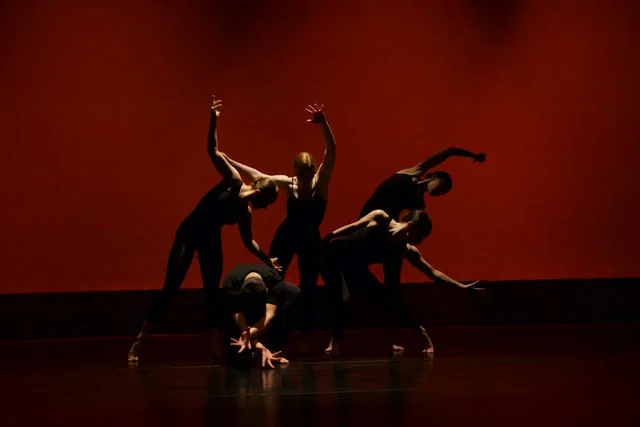
Flamenco Dance Classes in SwanseaPercussion you happen to perform standing up.
Flamenco is the style adults ask about far more often than they ever get to try, largely because it needs a floor worth hitting and nobody wants to hire one on a guess. So this page counts the guesses first. Put your name down for nothing; when the count is high enough we take a room with a hard, honest floor, book a teacher and email everybody a start date. Once it is running the rate is £10 a session, or £32 if four weeks are taken in one go — written down here rather than promised on the phone.
Enough names and we hire the floor.
Six fields, no fee, nothing agreed to. Postcodes matter more here than on most of these pages, because the room has to be the right sort of room and there are fewer of those. Everyone on the list is told the start date ahead of the wider world.
curiad is Welsh for beat, and beat is ninety per cent of this ✦
Loud on purpose, precise underneath.
Most people meet flamenco as spectacle and assume the noise is the point. It is not — the noise is the reward for accuracy, and a beginner spends far longer clapping a cycle out loud than hammering a floor. That order of operations is what makes it satisfying for adults: you can hear whether you are right, immediately, without anybody grading you. It is also danced entirely on your own account, so no evening ever depends on somebody else showing up.
Ears before feet. Hands learn a rhythm weeks quicker than legs do, so hands go first.
Slow is the whole method. Half speed and clean beats fast and muddy, every week, without exception.
You are never waiting on a partner. Nobody leads, nobody follows, and turning up alone is entirely normal.
Southern Spain by way of the Uplands.
We will be straight about the local picture, because pretending otherwise helps nobody: Swansea has no standing flamenco scene of its own, and this would be a taught class rather than an entry into one. What it does have is a stubborn appetite for anything with rhythm in it, a compact centre that makes an evening class realistic from Uplands, Sketty or the Marina alike, and an audience that turns out for touring shows in numbers a city this size has no business producing. A beginner room is the missing piece, not the audience.
The floor decides the venue. Carpet is useless and a hollow stage is glorious, which narrows the search considerably.
Neighbours get a mention. It is a loud hour, so the room we hire will be one where that is somebody else's problem to have solved.
Roughly how an hour would run.
once live — your teacher writes the real thingStand and clap
The cycle counted aloud and clapped through until it stops being maths and starts being obvious.
Arms, then feet
Long arm lines set first, because they take longest, then heel work drilled at a speed that feels far too slow.
Join it up
A short danced phrase with a beginning and an ending, taken through with music behind it.
an outline of an hour, never a fixed recipe — teachers build their own
One night at a time, paid on the night, with no block to finish and nothing to cancel.
About the span in which the rhythm moves from your head into somewhere more useful.
The only thing standing between flamenco and a Swansea room is the length of this list.
both figures printed above, which should not feel unusual and somehow does
Flamenco, answered.
nine things people ask before signing up ↓
How long before a flamenco class begins?+
Precisely as long as the names take to arrive. Flamenco gathers them more slowly than the party styles and holds onto them far longer, and the second the hire can be justified the date is fixed and posted out. Nothing goes public before this list has read it.
Do I need special shoes to start?+
Nothing specialist while you are finding your feet. Any shoe with a solid low heel and a hard sole makes a decent noise, and plenty of people begin in boots. Proper shoes are worth buying only if you stay, and they would be yours to buy — we do not stock, lend or sell footwear.
What does a flamenco session cost here?+
£10 on the night, or £32 if you take four weeks together, applying from the opening session onwards. There is no charge for sitting on the list beforehand, and no charge for changing your mind about it.
Could a complete beginner really manage flamenco?+
Comfortably, when the room has been built for one — which is the point of opening this by list rather than dropping a class into an existing timetable. No Spanish is needed, no rhythm training and no dance history at all. The one thing assumed is that you would rather be shown something slowly than flattered quickly.
Does anybody need to bring a partner?+
Nobody. This is danced facing the front on your own two feet, so there is no lead, no follow and no odd-one-out if a friend cancels an hour before. Solo arrivals are the norm rather than the exception.
Will I be stamping on night one?+
A little, and quietly. Volume is the last thing a good teacher hands over, because a fast muddy sound is worth less than a slow clean one. Expect your hands to be busier than your feet for the first few weeks.
What sort of room does flamenco need?+
One chosen mainly for its floor and its tolerance of noise, somewhere reachable from the centre on foot or a short bus ride. We hire it rather than own it, the address arrives with the start date, and the form's postcodes steer which end of the city we look in.
How long until it sounds like flamenco?+
Sooner than it looks like it, which surprises people. Rhythm arrives early because clapping is learnable; the arms and the carriage take months and are the real long game. A four-week block gets the first honestly and introduces the second.
Is there any performing or competing involved?+
None at all. There is no show at the end, no grading and nothing to enter. It is an evening class for adults who want to learn something difficult for the pleasure of it, and that is the whole offer.