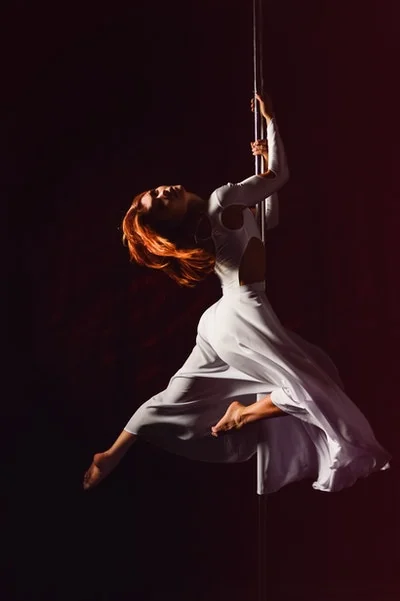
Pole Dance Classes in SwanseaEverybody begins at the bottom of the pole.
Pole is the one style on this site that cannot be run in whatever room happens to be free — it wants poles rigged properly and a floor rated to take them, so sessions sit in equipped rooms we hire, and which of them is available gets confirmed when you enquire. Everything else works like the rest of the site: join the list for nothing, and when there are enough names we book the room, book a teacher and email you a start date. £10 a session or £32 for four weeks once live, with no experience assumed and nobody going upside down in week one.
Names first, then the room.
Free to add yourself, and free to change your mind by simply not replying. The postcode helps us choose between the equipped rooms on offer; the email address is where the start date, the address and the packing note all turn up together.
equipped rooms are scarcer than teachers — this queue moves at the room’s pace ✦
Strength turns up later than you think.
The usual worry is upper-body strength, and it is misplaced. Technique carries a beginner far further than muscle does: where the hand sits, how a shoulder stays packed, which way the body is already turning. Plenty of people who have never lifted anything heavier than a laptop land a first spin before the gym regulars do, precisely because they are not trying to force it. What genuinely improves across four weeks is judgement — knowing when a hold is honest and when it is about to give up on you.
The room is the class. Rigged poles, a rated floor and matting are not things anybody can carry to you, which keeps this style in hired equipped rooms.
Nothing inverts early. Going upside down belongs to a much later stage, whatever the internet has led people to expect.
Bare skin does the holding. That is a packing note rather than a dress code: shorts you already own are fine, and moisturiser is not.
The shape of a beginner hour.
once live — every teacher builds their own sessionHands and floor first
Shoes off, a real warm-up for shoulders and wrists, and a first walk around the pole before anyone overthinks it.
One spin, then two
A basic spin taught, repeated on both sides, and a second added once the room looks steady on the first.
Strung together
Spins joined by walks and a floor shape or two, so you leave with something that reads as dancing rather than drills.
an outline only — the plan gets rewritten the moment a real group is standing in it
Pole rewards regular weeks more than most styles, though a gap will not undo you.
Four sessions is about where holding on stops being a fight and becomes a decision.
Adding a name costs nothing and books nothing — it simply tells us the demand is real.
both figures printed here rather than hidden behind a booking portal
A room near the Marina, most likely.
Pole in Swansea has a small, loyal following and a genuine shortage of rooms meant for absolute beginners — plenty of people are curious, far fewer are willing to walk into a session where everybody else already speaks the language. A demand-led list is good at exactly that gap: we open a room specifically for people starting at nothing, at a time the list agrees on, priced on the page. Practically, the equipped rooms available to hire sit around the centre and the Marina, so most of the city is a short bus ride or a ten-minute walk from one, with somewhere to eat afterwards without moving the car. Bendigedig is the word for the face somebody makes after a first clean spin, and we will accept no substitutes.
Room availability leads. Unlike every other style here the venue is the constraint, so dates flex around what can actually be rigged.
Nothing is issued. Shorts, grip aid and a towel are yours to bring; we do not sell, lend or stock any of it.
Pole, answered.
nine that come up every time ↓
Do I need upper-body strength to start pole?+
Less than you would guess. A first session is walks, angles and one basic spin, and technique does most of the lifting. Strength builds as a side effect over the weeks rather than being a condition of entry.
What actually happens in a first pole session?+
A long warm-up for wrists and shoulders, an introduction to how a pole is held, a spin taught in both directions, and then those pieces joined into something continuous. Nobody leaves the ground for long.
Where would a pole class in Swansea run?+
In a properly equipped room we hire — rigged poles, a suitable floor, matting where it belongs. Which room is free on which evening gets confirmed when you enquire, and the address reaches the list by email.
Is there a dress code for a first pole session?+
Shorts and a vest you already own. Bare legs hold where leggings simply slide, so covered legs make a first spin harder than it needs to be. We supply no clothing, no grip products and nothing else — bring whatever suits you.
What am I paying once pole sessions begin?+
Just two figures: £10 if you come to a single session, £32 if you take four in a row. No joining fee, no membership, no equipment charge behind them. Waiting on this list, by contrast, is free and stays that way.
Will I be expected to go upside down?+
Not remotely. Inversions belong to a far later stage and a beginners’ course does not touch them. If a teacher ever offers one it will be optional, and well after you have decided you want it.
Am I too old or too unfit for pole?+
The adult bracket on the form runs to seventy-five and it is not decorative. Sessions move at the pace of the room, breaks are normal, and this is one of the few styles where the strongest person present is rarely the quickest learner.
Can I come along with a friend or alone?+
Either works. Pairs are common because somebody always needs talking into it, but a good third of any beginner list arrives solo and nobody notices ten minutes in.
Why is pole run from a list rather than a timetable?+
Because equipped rooms get booked out well ahead and are expensive to hold empty. The list proves there are enough beginners to justify hiring one properly, which is also how the price stays where it is.